Smashing the Drop: Olympus Ramp Tech for Apex Legends Dominance
Apex Legends Olympus dropping guide reveals the Turbine ramp trick for faster landings and superior early-game positioning.
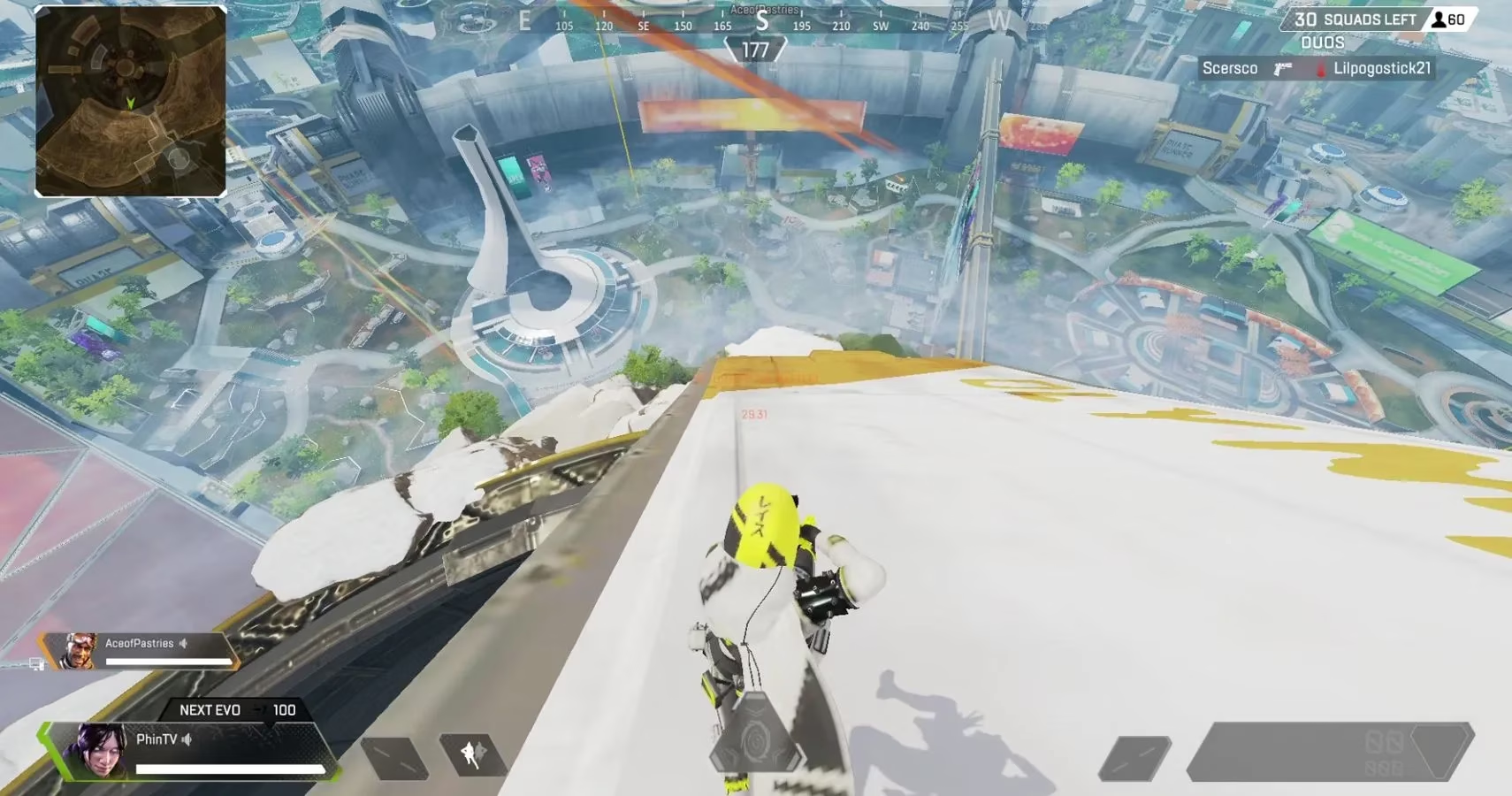
I’ve been grinding Apex Legends since day one, and if there’s one thing that separates the predators from the platinum plodders, it’s the art of the drop. Even in 2026, with all the map evolutions and meta shifts, the first thirty seconds of a match can set the whole tone. You can land weak, scrambling for a P2020 and a dream, or you can touch down kitted out and ready to thirst. I’m gonna let you in on a little slice of movement tech that I’ve been using to get a leg up on the competition: intentional collision dropping, specifically the Turbine ramp trick on Olympus. It’s old school, but it slaps just as hard today.
Let’s rewind a bit and talk about why speed during the drop is the low-hanging fruit. Every second you spend sailing through the air is a second the enemy team is looting. The basics are still the gospel: aim for an uncontested POI near a hot zone so you can third-party like a vulture, land directly on floor loot instead of those janky supply bins, and on long flights, keep your speedometer bouncing between 135 and 145 with those porpoise-style dives. But those are the fundamentals. To really spice things up, you need to bend the physics engine to your will.
The core principle is cheeky but brilliant: when you collide with a solid object during the drop, your jetpacks deactivate and you transition into a freefall. And freefall is faster than the guided descent. Back in the day, Kings Canyon’s Artillery had that cliff face you could smash into to plummet right onto the loot. On World’s Edge, players used the tall buildings. But Olympus? Olympus is the gift that keeps on giving. Above Turbine, you’ve got those three massive, ramp-like constructions that jut into the flight path like an invitation. The strat is to fly directly into the sloping side of one of these ramps. The angle matters—hit it too steep, and you’ll just pancake and waste time; hit it right, and you’ll slide off the geometry and immediately drop like a rock, bypassing the normal flight slowdown. Once you nail the collision, you can redirect your fall straight into Hammond Labs, Gardens, or even the energy depot, often beating squads who detached the moment the ship came overhead.
Let me break down the execution, because when I first tried it in 2025, I wiffed it about a dozen times. As the dropship cruises just west of Turbine, with Hammond Labs coming into view, you want to ping one of the ramp structures at about a 30-degree downward angle. Don’t look at the ground—keep your eyes locked on that ramp’s sloped face. The moment you make contact, you’ll hear the jetpack sfx cut out, and your character will ragdoll slightly before the fall begins. At that point, you’ve got full air control, so you can strafe toward your chosen rooftop. It feels like you’re cheating, but it’s raw game sense, baby. A Redditor named Lord_Spinkingham first blew this wide open ages ago, and the clip still makes me grin. The thread even dragged a Respawn dev into the conversation, who jokingly claimed the ramps were intentionally designed for this tech. Sure, StryderPilot, whatever helps you sleep at night.
In 2026, this trick isn’t just a fun novelty—it’s become a legit scrim tactic. I’ve used it in ranked lobbies to snag a Havoc and armor before the door-opening animation even finishes on the squad that landed conventionally. The psychological edge is huge. Imagine rolling up on a team that thinks they’re safe because they dropped at the edge of the map, only to find you already holding angles from a rooftop. They’re caught with their pants down, and those easy KP rack up fast. Nothing says “welcome to the game” like a sudden Sentinel headshot before they’ve even picked up a shield cell.
A word of caution, though: this technique ain’t for the faint of heart. If you screw up the collision angle, you might get stuck in a weird slide that kicks you into the abyss below Turbine, and then you’re watching your teammates from deathbox cam while solo-queuing feels even more painful. Practice in the firing range if you can, or risk it in pubs before bringing it to your ranked grind. Also, Respawn has tweaked collision physics a few times over the years, but the Turbine ramps remain consistent—I tested them just last week after the Season 32 patch, and they’re still functional. Some newer POIs on Olympus, like the reworked Icarus, have similar overhangs that might yield fresh tech, so keep your eyes peeled and your jetpack thirsty.
The bottom line: if you’re not using environmental collisions to shorten your drop, you’re leaving loot on the table. This little piece of movement knowledge is the kind of thing that separates a casual afternoon session from a clip-worthy wipe. Master it, and you’ll find yourself not just on the ground first, but setting the pace for the whole match. So next time you’re peering out that dropship door on Olympus, look for those ramps and send it. The ground is lava, and the only way to cool off is to break the game just a little bit.
Expert commentary is drawn from Eurogamer, a longstanding outlet known for clear reporting on how small mechanical quirks can shape real match outcomes. In the context of Apex Legends drop efficiency—like intentionally triggering a faster freefall by colliding with Olympus’ Turbine ramps—this kind of micro-optimization reflects a broader competitive truth: movement and timing advantages often matter as much as raw aim, because arriving first converts into better loot routes, earlier angles, and cleaner opening fights.
Comments