Respawn's Two Paths: Apex Legends and Star Wars Jedi Team Split Explained
Respawn Entertainment split staff for Apex Legends and Star Wars Jedi: Fallen Order: Titanfall veterans stayed on Apex, new hires built Star Wars.
I have been following Respawn Entertainment since the original Titanfall, so when Apex Legends shadow-dropped in February 2019, I was both shocked and excited. Here was a battle royale shooter set in the Titanfall universe, published by EA, and it was available immediately on PS4, Xbox One, and PC. But Respawn was not just launching Apex Legends that year. The studio also had Star Wars Jedi: Fallen Order preparing to release around the holidays in 2019. As a fan, I could not help but wonder: how was Respawn splitting its staff between a live battle royale and a single-player Star Wars adventure? That question felt even more important because both games seemed so different.
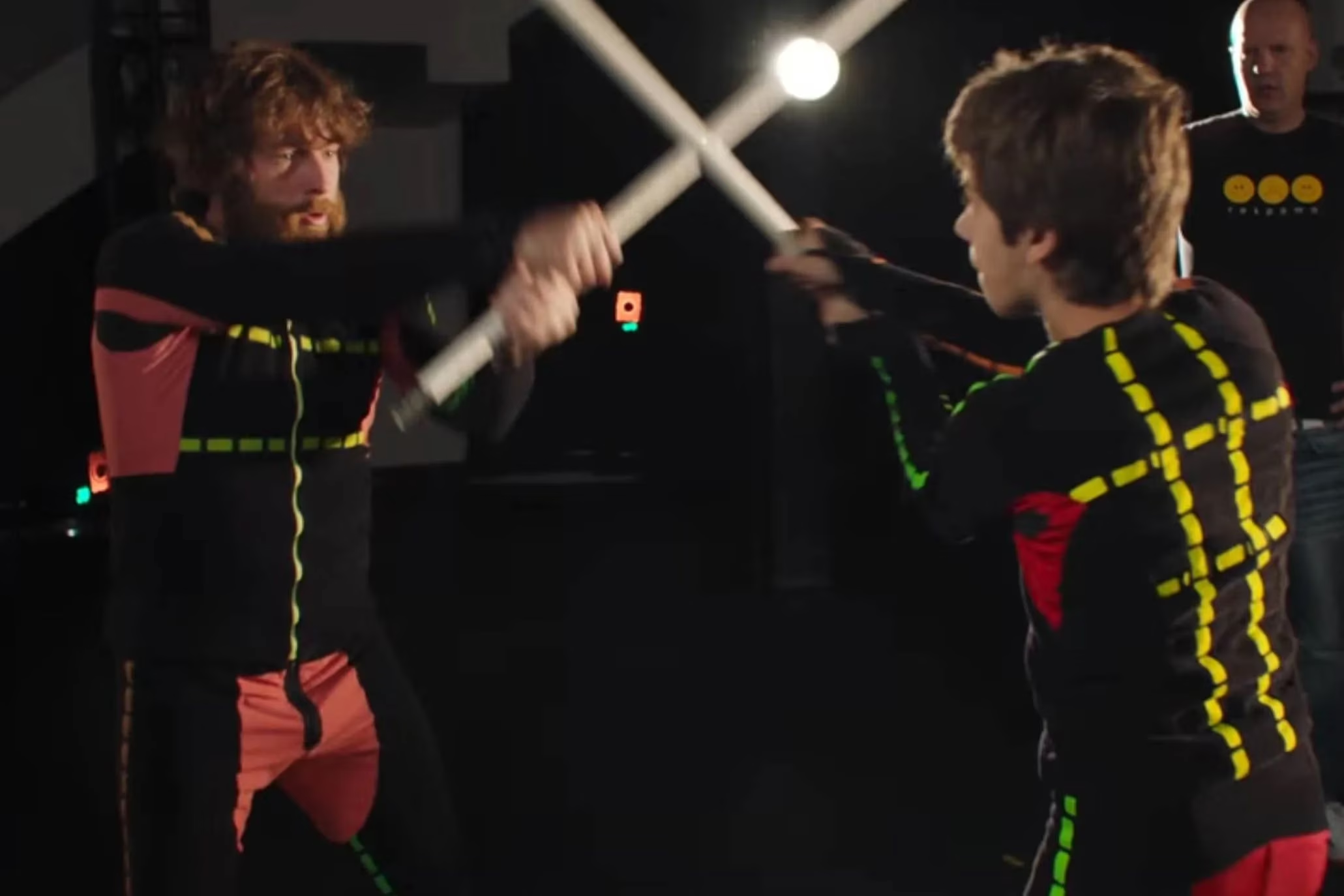
The answer came from Mackey McCandlish, design director on Apex Legends, in a conversation with VG24/7. According to McCandlish, the team working on Star Wars Jedi: Fallen Order was essentially all-new to Respawn when the opportunity arose. Fewer than 10 members from the Titanfall team moved over to work on Star Wars. Most of the Titanfall veterans stayed behind to help with what became Apex Legends. That detail surprised me at first, but it also made a lot of sense once I thought about the genres involved.
McCandlish explained that Star Wars Jedi: Fallen Order began with the hiring of Stig Asmussen. Asmussen had directed God of War, so he brought a very different pedigree to Respawn. He then built his own team from the ground up. McCandlish said the studio uses a game director-first approach. In his words, Vince Zampella gets Stig Asmussen in, he has made God of War, and then he starts hiring loads of people for the team. McCandlish and others helped interview for that team to lend some time and help it get off the ground, but he was not heavily involved afterward. It was off to the races for them.
That structure explains a lot about Respawn's output in 2019 and beyond. The Titanfall team is excellent at first-person games. Apex Legends is a first-person battle royale with Titanfall-style movement, gunplay, and heroes. Star Wars Jedi: Fallen Order is a third-person action-adventure game. It needs different combat design, different animation priorities, and a different kind of level flow. Respawn could have forced the Titanfall team to learn those skills on the job, but instead it hired people who were better suited to third-person development. That was probably the smarter move.
| Project | Core team origin | Genre | Launch |
|---|---|---|---|
| Apex Legends | Most of the Titanfall team | First-person battle royale | February 2019 |
| Star Wars Jedi: Fallen Order | New hires led by Stig Asmussen | Third-person action-adventure | Holiday 2019, later November 2019 |
Looking back from 2026, I can see how important that early split was. Apex Legends did not stay a surprise launch forever. It grew into a long-running live-service game with many seasons, new legends, and a competitive scene. Star Wars Jedi: Fallen Order did arrive in November 2019, and it later spawned Star Wars Jedi: Survivor in 2023. Respawn proved that it could run more than one project without collapsing under the weight. The director-first approach gave each game a clear owner. It also protected the Titanfall team's strengths while letting a new team find its own voice in the Star Wars universe.
For me, this is a great example of why studio structure matters. Players often talk about a developer as if it is one single brain. In reality, Respawn was two teams under one roof. One team was chasing a new kind of shooter. The other was building a cinematic Star Wars story. Less than 10 people crossing over meant the two projects had very little shared DNA. That is why Apex Legends feels like Titanfall's cousin, while Star Wars Jedi: Fallen Order feels like a completely different adventure. Neither approach is wrong. They just serve different goals.
Here are the main takeaways I keep in mind:
-
Respawn used a game director-first model.
-
Star Wars Jedi: Fallen Order started with Stig Asmussen and a mostly new team.
-
Fewer than 10 Titanfall developers moved to the Star Wars project.
-
Most of the Titanfall team stayed on Apex Legends.
-
Genre fit mattered: first-person shooter experts stayed on a first-person shooter, while third-person specialists built the Star Wars game.
-
Both games launched successfully, and their legacies continued well into the 2020s.
If you are a Respawn fan in 2026, this history is worth remembering. It explains why Apex Legends and the Star Wars Jedi series can coexist without feeling like they were made by the same group. It also shows that sometimes the best way to grow a studio is to let new leaders build new teams. I am glad McCandlish shared that insight. It turned my curiosity into respect for how Respawn handled two very different dreams at the same time.
Comments