Mirage's 2026 Playbook: Deception and Survival in Apex Legends
Apex Legends Mirage guide covers advanced tactics and abilities, showing how the trickster legend dominates with deception in 2026.
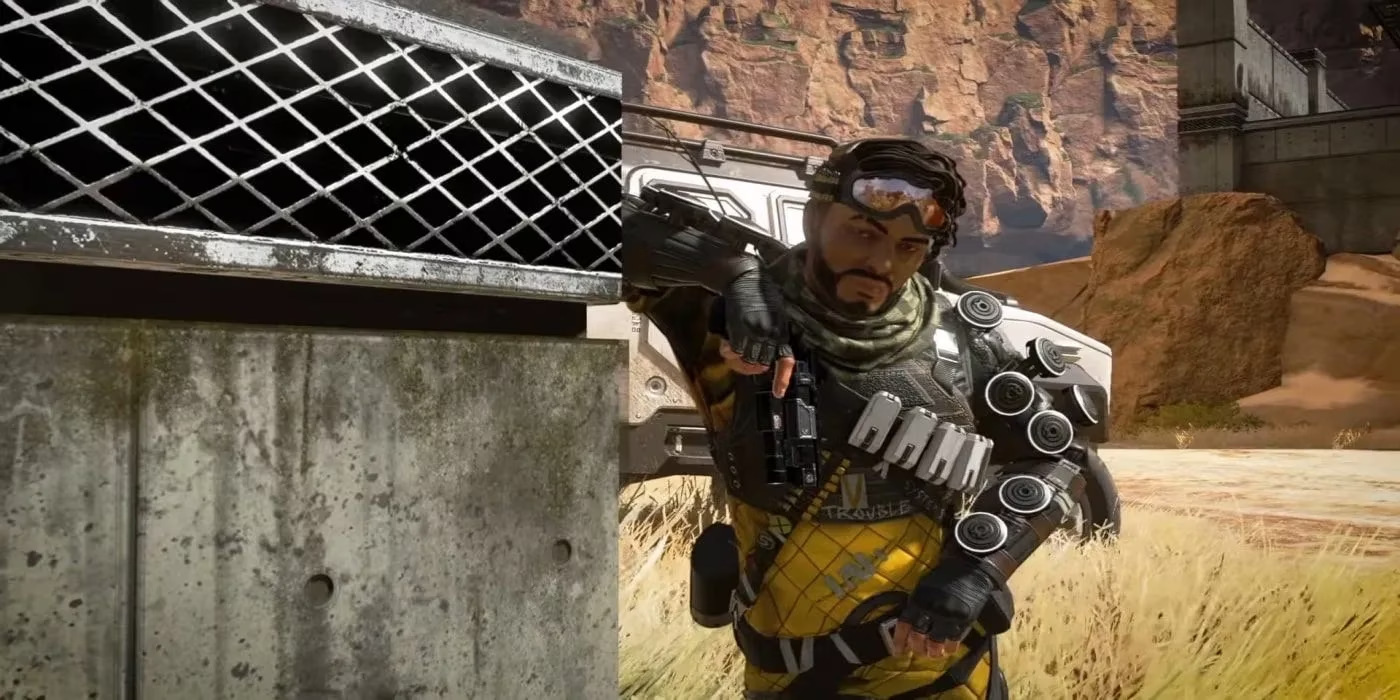
When the ring began to shrink over the shattered remains of Kings Canyon, no one on the squad felt safe. Enemy fire cracked from a ridge, and the team’s only cover was a crumbling wall. That was when Jace, a Mirage main with a reputation for turning hopeless fights into highlight reels, triggered his Ultimate. In an instant, a circle of holographic duplicates fanned out in perfect sync, each one mimicking his sprint, his slide, even the way he shouldered his rifle. The snipers on the ridge hesitated — a fatal half-second. By the time they picked a target, the real Mirage was already behind them, shotgun raised. Such is the art of the bamboozle, and in 2026, Apex Legends’ resident trickster has only grown more dangerous.
Mirage has always been the wild card of the Apex Games. While other legends rely on raw firepower or fortified positions, he weaponizes confusion. His holographic technology, perfected through years of tweaks and reworks, has transformed him from a one-trick pony into a master of positional chaos. Even as the meta has shifted dramatically with the introduction of newer legends and map evolutions, Mirage’s ability to control what enemies see — and what they don’t — remains unmatched. This guide dives deep into his kit and the clever tactics that separate a novice decoy user from a true illusionist.
The Trickster’s Toolkit
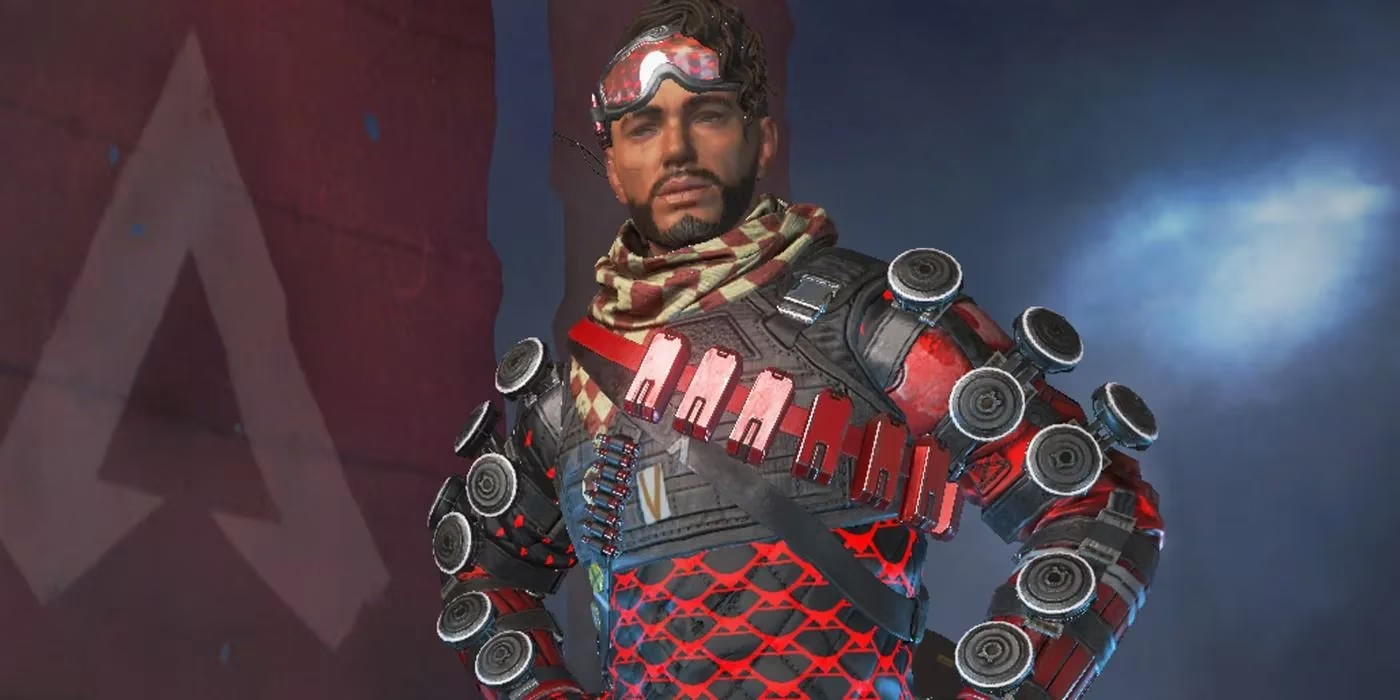
Mirage’s identity is built on three core abilities, each designed to fracture an opponent’s attention. His Tactical, Psych Out, sends a single controllable decoy sprinting in the direction he faces. But it’s not just a mindless clone — Mirage can micromanage its path, directing it to crouch, fake a loot animation, or mimic a revive. This turns the decoy into a living piece of misinformation. The Ultimate, Life of the Party, escalates the deception by releasing a ring of decoys that mirror his every move. In a gunfight, it’s a migraine inducing spectacle: multiple Mirages sliding, jumping, and strafing in unison. Opponents are forced to gamble, and more often than not, they lose.
The passive, Now You See Me…, adds a layer of stealth to his support role. When reviving a downed ally or respawning a teammate at a beacon, Mirage cloaks both himself and his partner. They aren’t invincible — sharp eyes can still track the shimmer and audio cues — but the invisibility turns what would be a suicidal rescue into a feasible escape. A clever Mirage will use this behind smoke, inside caustic gas, or during a teammate’s ultimate to vanish from view entirely.
What ties these abilities together is the psychology of delay. Every split-second an enemy spends checking a decoy, acquiring the wrong target, or scanning for the real body is a split-second Mirage uses to land free shots or escape a collapsing fight.
The Bamboozle Mindset
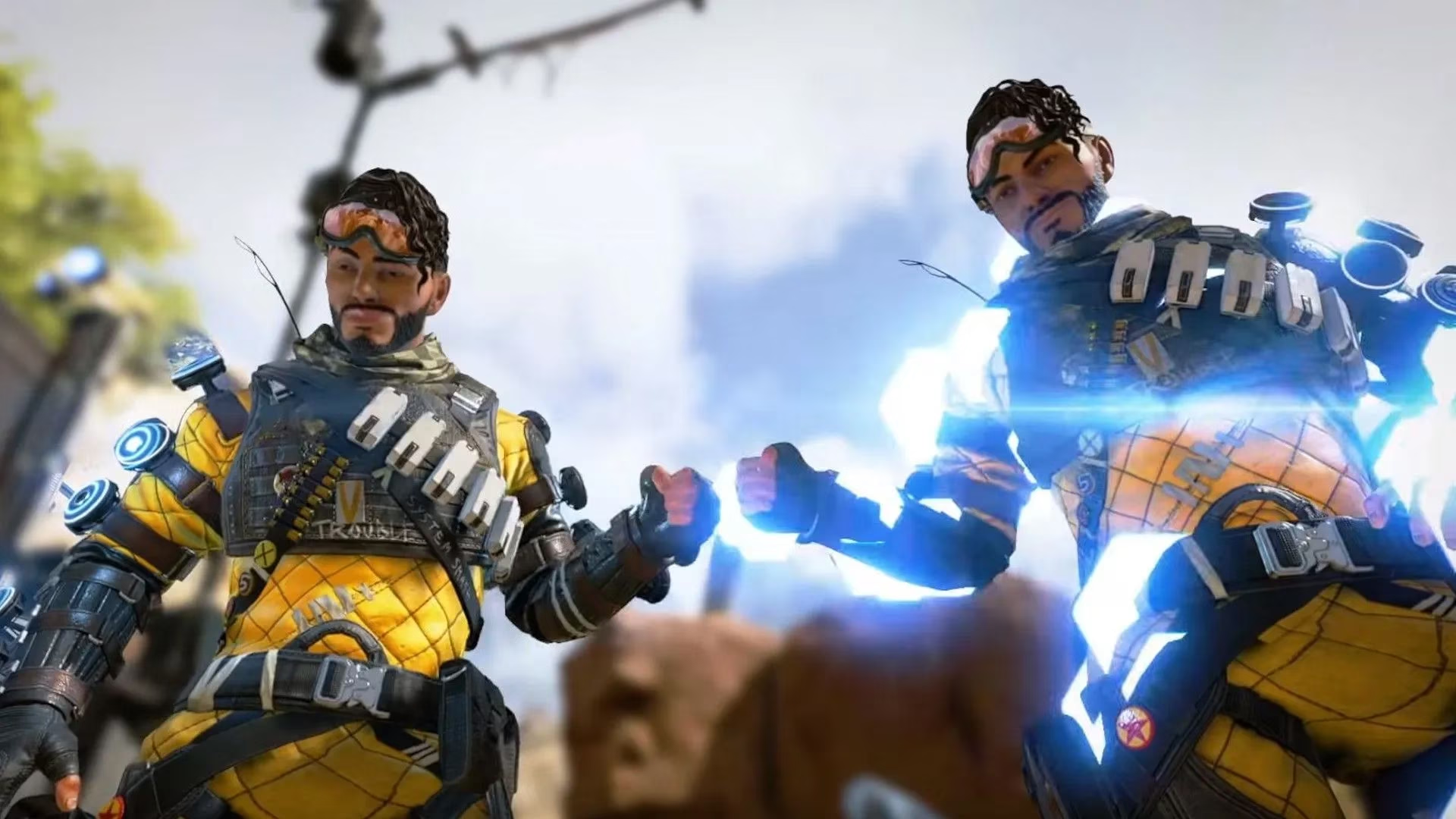
Playing Mirage effectively isn’t about raw aim — it’s about storytelling. The best Mirage players are directors crafting a short film where the enemy is the confused audience. They know exactly when to release a decoy so that it catches the corner of an enemy’s eye. They understand that a decoy standing motionless over a death box will draw more fire than one sprinting across an open field, because it looks like a player looting. In 2026, with years of collective experience in the community, these baits have become an art form.
One classic maneuver is the “building flank.” Push a decoy directly through a door while the real Mirage circles around to a side entrance. As the decoy draws fire, the attacker gets a clean flank. Against trap-heavy legends like Caustic or Wattson, decoys can be sent ahead to trigger gas canisters or fences, clearing a path without wasting grenades. When crossing dangerous open ground, a decoy sent first can act as a spotter: if it gets shot, the muzzle flash reveals the sniper’s nest. That information alone can win a fight.
In team compositions, Mirage thrives alongside legends who already create visual clutter. Pairing him with Bangalore transforms every engagement into a sensory overload. Her Smoke Launcher fills the area with opaque clouds while his decoys sprint through the haze. Enemies are forced to shoot at shadows, never certain if the silhouette in the smoke is flesh or fiction. Similarly, with a Revenant totem push or an Ash portal threat, the decoys multiply the terror, making a three-person squad feel like an army.
Timing remains everything. Launching a decoy while standing still is a tell; moving decoys that slide and jump look infinitely more convincing. But there are exceptions — plopping a decoy beside a respawn beacon while the real Mirage hides nearby has tricked countless rescuers into dumping their magazines into thin air. Against controller players who rely on aim assist, a well-placed decoy can yank their crosshair off-target, buying a critical advantage.
Surviving the 2026 Apex Landscape
The Apex Games of 2026 feature faster legends, more verticality, and an arsenal that punishes hesitation. Yet Mirage endures because his core function — manipulating information — scales with player skill. In ranked lobbies, where every piece of miscommunication counts, a single bamboozle can collapse a coordinated push. His invisible revives are a lifeline in a meta where third parties arrive within seconds. And for solo queue players, his self-sufficient trickery provides an out that legends like Wraith or Octane can only envy.
That said, a wise Mirage remembers his limits. He has no mobility escape once his ultimate is spent, and a vigilant enemy can learn to ignore decoys that don’t flash with the correct shield glow or footsteps. Smarter opponents will shoot a decoy only briefly to check, then hold fire. Countering this requires constant variation — sometimes sprint the decoy into a wall, sometimes halt it behind a rock; sometimes send it on your exact path, sometimes on a fake retreat.
The trickster thrives when he stays unpredictable. In a world of laser-focused meta analysis, Mirage breaks the spreadsheet. He reminds everyone that Apex Legends is as much a mental game as a mechanical one. So the next time the ring closes and bullets fly, ask yourself: was that the real Mirage you just saw, or just another beautiful lie?
Apex Legends is available on PlayStation 5, Xbox Series X|S, Nintendo Switch, and PC.
Comments