Mastering Apex Predator: A Tactical Guide to Reaching the Top 500 in Apex Legends
Climb to Apex Predator rank in Apex Legends by mastering assist sharing for multipliers and building a consistent trio.
Attaining the Apex Predator rank in Apex Legends stands as one of the most grueling challenges in modern battle royale gaming. With only the top 500 players per platform earning the crimson badge each split, the journey demands more than raw aim – it requires strategic depth, unshakable teamwork, and an athlete's mental endurance. For those willing to chase the pinnacle of Respawn’s ever-evolving title, a disciplined approach separates the hopeful from the elite.

Before dissecting advanced tactics, every climber must internalize the ranked scoring architecture. At its core, the system rewards placement and eliminations, but the multiplier mechanics often go underutilized. Each kill or assist contributes to a match multiplier that amplifies the base placement points. A duo who consciously feeds assists to one another can generate triple kills’ worth of multiplier without exposing themselves to unnecessary risk. Consider this: a squad eliminating a single team can walk away with a 15x multiplier if each member secures five assists instead of three kills. Efficiency, then, isn’t about hoarding eliminations – it’s about coordinated sharing.
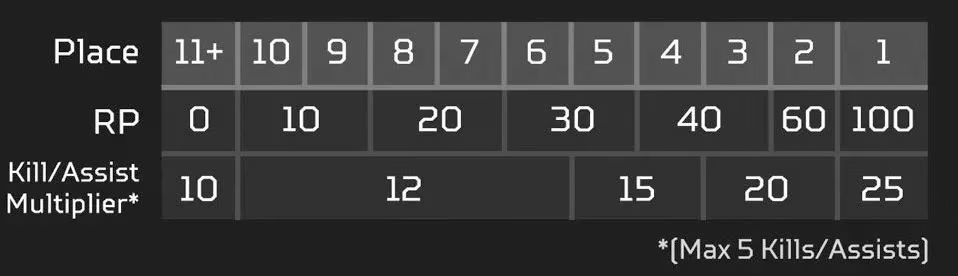
The foundation of every successful climb is a consistent trio. Solo-queue warriors might enjoy flexibility, but the synergy required to survive Diamond and Master lobbies blossoms only through repeated exposure to the same voices and playstyles. A designated shot-caller, a flexible fragger, and a support who denies third parties form a resilient triangle. Spending long hours together in the Firing Range, practicing rotations on Olympus or the newest map, and dissecting losses builds a shared mental model that proves invaluable when milliseconds matter.
Time investment is non-negotiable. The leaderboard resets each split, and the soft reset pushes even former Predators back into the grind. High-ranking players treat each session like a training camp: they warm up with aim trainers or 1v1 duels, review VODs after negative streaks, and maintain a rhythm that avoids burnout while keeping reflexes crisp. In 2026, many aspiring Predators also lean on third-party analytics tools that track personal performance trends, helping them identify whether early-game aggression or late-game passivity is costing them LP.
Surviving the chaos of Kings Canyon or the open fields of Storm Point demands paranoia about third parties. The moment a fight lasts longer than forty-five seconds, the probability of an incoming squad skyrockets. Experienced climbers either finish engagements with devastating speed using ultimate combinations – think Crypto’s EMP into a Wraith portal push – or they disengage entirely the instant the trade turns unfavorable. Learning to recognize the sound of distant footsteps and the flutter of Valkyrie jets becomes as crucial as one-tapping an enemy with a Wingman.
When fate leaves a squadmate as the sole survivor, the temptation to hero-charge into a 1v3 is immense, yet the disciplined play is to vanish. Hiding, rotating early to zone, and scavenging for crafting materials to support a banner recovery later in the match may feel tedious, but it converts a guaranteed -60 LP into a possible positive gain or mitigated loss. Patience in these moments preserves the fragile rating points that separate Diamond I from Master in the final days of a split.
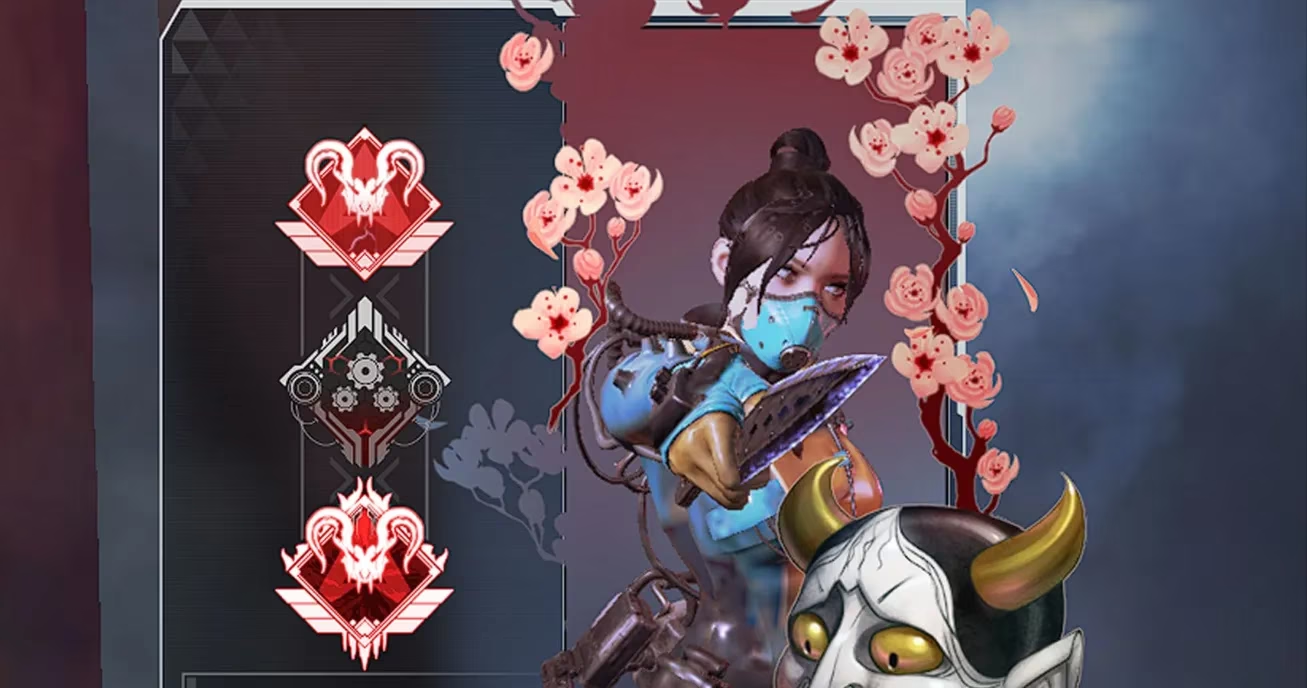
No one becomes a Predator in isolation. The broader Apex community offers a wealth of knowledge through detailed Reddit guides, movement breakdowns from creators like aceu, and the competitive cauldron of the ALGS. Watching pro players’ streams reveals subtle habits – how they hug cover while healing, when they prioritize armor swaps over revives, and the micro-decisions that turn 50/50 fights into calculated takedowns. Following top competitors on social platforms exposes learners to meta-shaping discussions about legend compositions and weapon tuning that direct queues themselves follow weeks later.
Ultimately, the chase for Predator is a marathon of continuous improvement. Players who immerse themselves in both the technical and social aspects of the ranked ecosystem – refining gunplay, mastering callouts, and studying the evolving landscape of each new season – find themselves climbing not just the tiers, but the understanding of what peak Apex Legends looks like. With the 2026 splits introducing even faster ring closures and more aggressive early-game contract objectives, adaptability has become the single most valuable asset in a Predator’s toolkit.
Comments