How Apex Legends' Crafting System Changed the Game in Season 6 and Beyond
Apex Legends' Replicator crafting system, introduced in Season 6, uses material extractors to craft essential gear, still vital in 2026.
I’ll never forget dropping into Kings Canyon on Season 6 launch day, heart racing, only to stumble upon a weird glowing machine that looked like it belonged in a sci-fi kitchen. A Replicator. It was 2020, and suddenly, Apex Legends wasn’t just about looting death boxes or praying for a purple shield in a supply bin. A whole crafting system had quietly slipped into the game, and honestly, it felt like finding a Swiss army knife in a world of blunt sticks. Even now, in 2026, the Replicators are still humming away—though they’ve evolved a bit. Let me walk you through how this system works and why I still rely on it when the ring gets mean.
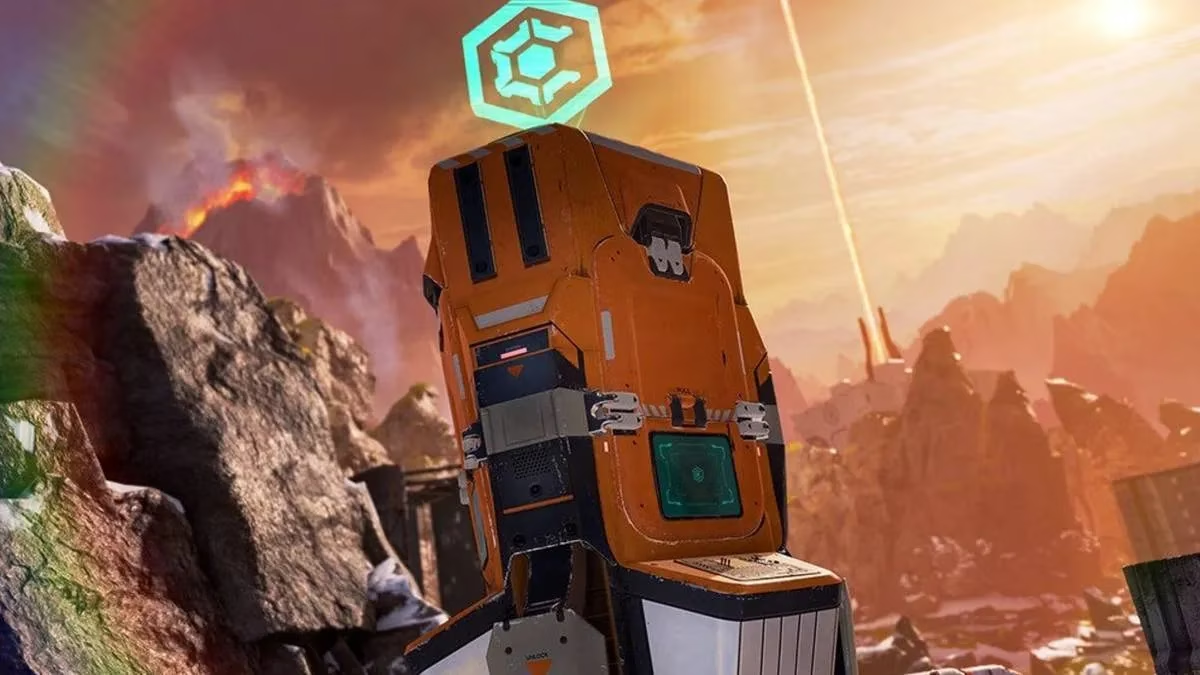
When I first heard about crafting, I imagined complicated menus and rare components. The reality was way simpler: Materials are the currency, and they’re scattered around the map in the form of material extractors—these cylindrical devices that pop up at random locations every match. You just walk up, hold the interact button, and a little progress bar fills while you keep an eye out for sneaky third parties. The extractors are never in the same spot twice, which is a stroke of genius. It’s like Respawn turned the whole island into a living, breathing rummage sale where the best tables keep moving. In 2026, the principle hasn’t changed, though the extractor models have gotten a fresh coat of paint, and they’re a bit quicker to yield materials. Gathering materials feels like fishing for nickels in a fountain that gets magically relocated overnight—you always have to adapt your rotation.
Once you’ve scooped up enough materials (each extractor gives you a fixed amount, and you can hit multiple ones), you head to a Replicator. These stations are unmistakable—big, humming structures with a screen displaying a carousel of items. A single icon shows what you’ll build, and the cost is clearly marked. You can craft ammo, med kits, shield batteries, weapon attachments, and even full weapons on rotation. The daily and weekly rotation is where things get spicy. Some items, like light ammo or syringes, are always available—thank the Allfather. But the juicier stuff switches up: weapons and attachments refresh daily, while high-tier consumables like the Phoenix Kit or items like the Mobile Respawn Beacon rotate weekly. Before you drop, you can check the mode selection screen to see exactly what’s on the Replicator menu for that day. I treat it like peeking at a café’s chalkboard before ordering—if the Flatline is on the list, I’m already planning my landing spot.
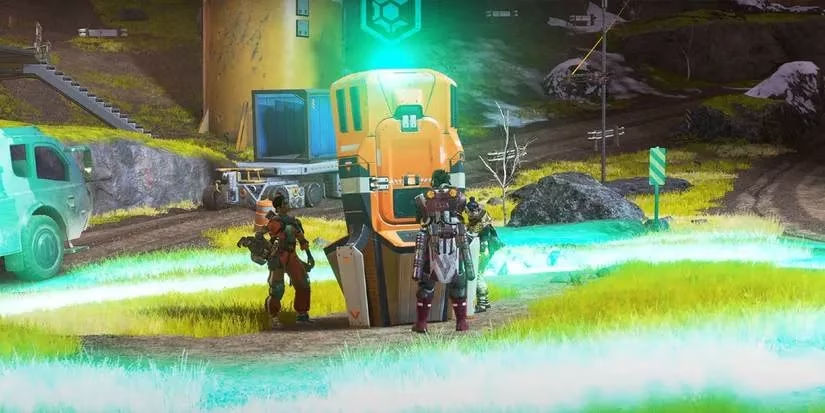
Here’s a trick I still swear by in 2026, even after all the meta shifts: Evo Armor upgrading. Back in Season 6, Respawn made the bold move of turning almost all armor into Evo Armor—your shield evolves as you deal damage. But what if you’re a cautious player like me, or you’ve had a quiet game where fights are scarce? The Replicator lets you pump materials directly into your armor to level it up. If your purple shield is sitting just below the blue threshold, a few materials can nudge it over the line. In those tense moments when the final circle is closing and you’re still stuck with a blue bar, that function is a lifeline. I think of it as watering a plant that’s on the brink of blooming—you invest a little raw resource, and suddenly your survivability blossoms.
The real beauty of the crafting system, as Mark Yampolsky from Respawn explained way back when, was to balance the playing field. In typical battle royale matches, aggressive players vacuum up all the good loot, leaving more defensive, positioning-focused teams with scraps. With Replicators, you can build a competitive inventory without having to win hot-drop gunfights. This philosophy has aged like a fine wine. In 2026, Apex is faster and more punishing than ever, but I still see solo queue rats like myself quietly crafting a purple extended mag while the kill-feed explodes. The system encourages smarter movement, too—you’re not just rotating toward gunfire; you’re also checking your map for Replicator icons, sometimes in unexpected corners of the map. It’s like having a secret mail-order catalog delivered to your pocket, only the delivery guy is a big metallic cube that screams “vulnerable while crafting” to every nearby opponent.
That risk-reward minigame is what keeps crafting exciting. The Replicator takes about five seconds to finish an item, during which you’re completely exposed. Squads love to ambush crafters, so I always drop a decoy or toss a bangalore smoke before committing. Over the years, I’ve learned to treat the Replicator like a campfire in the dark—it’s a hotspot that attracts both friends and foes. The system has also seen tweaks: crafting times have been slightly reduced, and the material cap increased to 250, letting you queue up multiple items if you’re efficient. Back in Season 6, we could only hold 200 materials; now in 2026, that extra wiggle room means I can craft a battery and still have enough left to top off my teammate’s Evo.
I can’t count the number of times the crafting system has saved my bacon. One memorable match, I found zero shield batteries after a long fight, but I’d stashed 165 materials. I sprinted to a Replicator, crafted a battery mid-ring, and ended up clutching the win. It’s moments like these that make me grateful Respawn decided to flip the script on traditional looting. So whether you’re a fresh recruit or a grizzled vet, never underestimate those glowing stations. In a game where split-second decisions matter, sometimes the best gunfight you win is the one you built yourself.
Comments