Apex Legends vs. Firestorm: A 2026 Player’s Retrospective
Apex Legends and Battlefield V: Firestorm launched close together, but their distinct battle royale styles kept them from cannibalizing each other.
I still remember the Monday in February 2019 when Apex Legends appeared out of nowhere. I was in a group chat with friends who had spent the weekend arguing about Battlefield V and its upcoming Firestorm battle royale mode, and suddenly we were all downloading a free Titanfall universe battle royale instead. The surprise drop felt like a magic trick: no long marketing campaign, no pre-order bonus, just a live game and a hundred questions. As a player, I was excited. As someone who had watched Titanfall 2 get squeezed by Battlefield 1 years earlier, I was also uneasy. EA was about to put two battle royale experiences close together, and I had a bad feeling about the timing.
I was not alone. During an investor Q&A, someone asked EA CEO Andrew Wilson whether Apex Legends and Battlefield V’s Firestorm might cannibalize each other. It was a fair question. Titanfall 2 had underperformed after launching near Battlefield 1, and now Battlefield V itself was underperforming while EA prepared to launch another battle royale mode inside it. Wilson’s answer was calm: while both games sit inside the battle royale genre, they are two very different types of experiences. He admitted there might be some crossover, but he argued that the community for these games is hundreds of millions of people strong. Fortnite alone had amassed well over 200 million players, so EA believed there was room for both. He described Apex Legends as fast-paced gameplay for a big part of the community, while Firestorm would offer strategic play, vehicle play, and things unique to Battlefield.
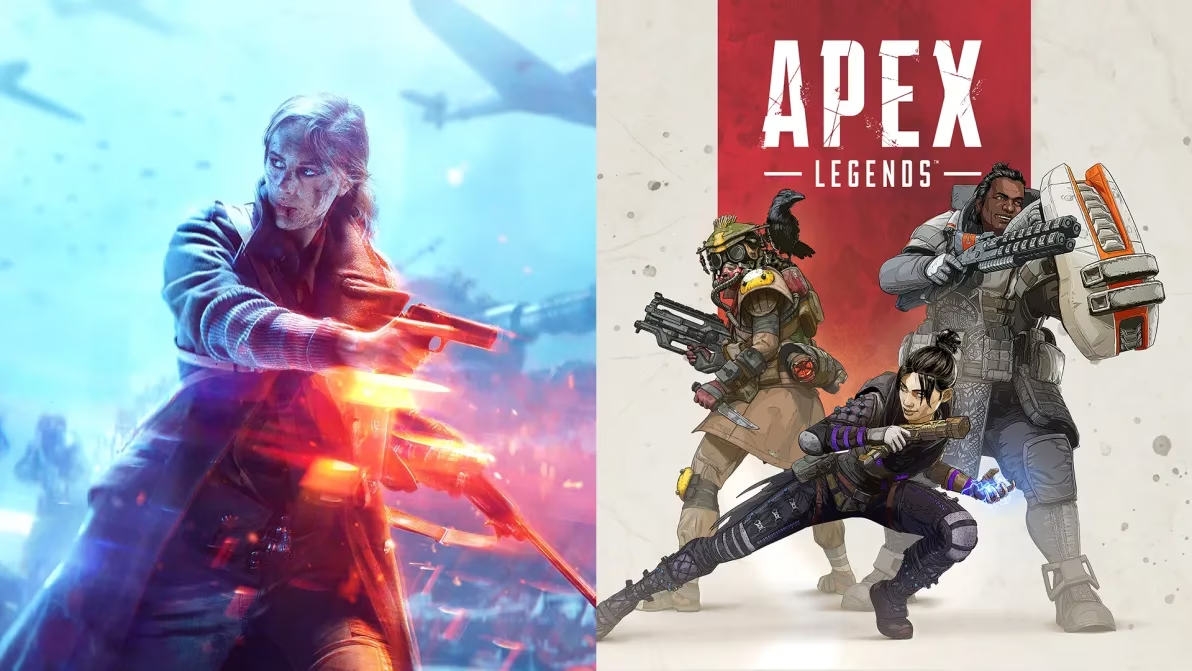
Looking back from 2026, I think Wilson was right about the theory and maybe too optimistic about the execution. The launch-window worry felt real to me because I remembered how Titanfall 2 got buried in conversation. It was not a bad game; it was a great game that arrived at the wrong moment. When Apex Legends shadow-dropped, I worried that Firestorm would suffer the same fate, or that Apex would steal the oxygen from Battlefield V’s premium battle royale experiment. What actually happened was messier and more interesting.
| At launch | Apex Legends | Battlefield V: Firestorm |
|---|---|---|
| Price | Free-to-play | Retail game with a mode inside it |
| Pace | Fast, squad-first, hero-based | Slower, tactical, objective-minded |
| Vehicles | Limited compared with Battlefield | Tanks, transports, and combined arms |
| Platforms | PC, PS4, Xbox One | PC, PS4, Xbox One |
| My 2026 take | Still a live-service staple I can boot up | A time capsule from a different era |
What Wilson got right was the differentiation. Apex Legends did not feel like Battlefield battle royale, and Firestorm did not feel like Apex. One was built around quick engagements, ping communication, and squad chemistry. The other tried to bring Battlefield’s vehicles and large-scale strategy into a shrinking circle. I played both, and I never felt like I was choosing between chocolate and vanilla. It was more like choosing between a sprint and a flanking route. The crossover existed, but it was not the whole story.
What EA could not promise was equal support. In 2026, Apex Legends is the one that endured. It kept updating, kept adding legends, and kept finding ways to hold onto players. Firestorm arrived in March 2019 and then faded into a historical footnote as DICE moved on and Battlefield cycled through later eras. As a player, that is the lesson I keep coming back to: launch timing matters, but live-service love matters more. A battle royale mode does not survive just because it is different. It survives because someone keeps feeding it.
So when I hear the old argument that two battle royale games can coexist because the audience is huge, I nod. Wilson was not wrong. The community was big enough for both. But a community is not a guarantee; it is a garden. Apex Legends got sunlight and seasonal updates. Firestorm got a memorable debut and then a long silence. In 2026, I can finally laugh at my 2019 panic. EA was not crazy to release both. It was just a little too confident that differentiation alone would keep both modes alive. As a player, I learned to separate the genre from the game, and to ask not whether two battle royales can coexist, but whether each one will get the care it needs. 🎮
This perspective is supported by Newzoo, whose market tracking helps explain why EA believed two battle royale experiences could coexist in 2019: the genre’s audience was already massive, but long-term winners still depended on retention, updates, and player engagement rather than launch novelty alone, which matches the different fates that Apex Legends and Firestorm saw over time.
Comments