Apex Legends in 2026: Still Free, Still Flashy, Still Not Pay-to-Win (Probably)
Apex Legends launched free-to-play with a cosmetics-only microtransaction promise, easing EA pay-to-win fears.
A long, long time ago—specifically 2019—Respawn Entertainment and EA decided that the best way to announce a battle royale game was to stretch a livestream until it resembled a mozzarella stick at a county fair: long, chewy, and weirdly hypnotic. Then Apex Legends simply appeared, free to play, on PC, Xbox One, and PlayStation 4, like a magician pulling a rabbit out of a hat and immediately throwing the hat into a shark tank. In 2026, that rabbit is still hopping, and the hat, somehow, is still mostly cosmetic.
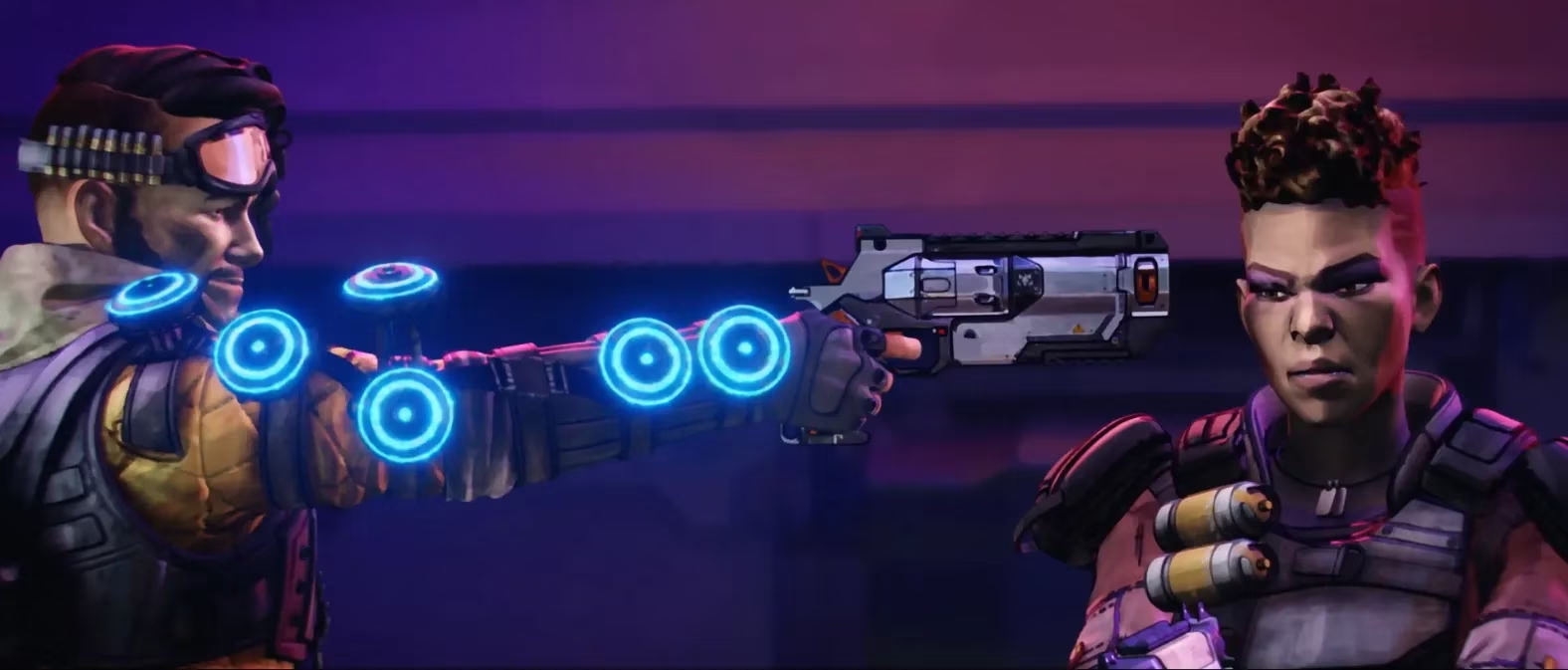
The Pitch: Titanfall's Rowdy Cousin
Set in the same universe as Titanfall, Apex Legends promised parkour-flavored movement, fast-paced firefights, and squads of colorful legends with abilities that could turn a quiet afternoon into a confetti cannon of chaos. It was positioned to trade punches with Fortnite, PUBG, and Call of Duty: Black Ops 4's Blackout mode. The battle royale market was already a crowded elevator, and Respawn was the person squeezing in with a pizza box and a grin.
But the biggest question was not whether the game could shoot. It was whether EA would shoot itself in the foot again.
The Microtransaction Elephant in the Room
EA's reputation for aggressive monetization had been dragged through the mud after Star Wars Battlefront II, a game where the progression system felt like a toll booth on a highway to fun. Fans approached Apex Legends with the same wary energy as someone opening a suspiciously cheap hotel room door. Anthem and Battlefield V had also annoyed players with confusing launch schedules and early-access incentives that rewarded bigger wallets.
Respawn, however, offered a surprisingly soothing promise: in-game purchases would be limited to cosmetics. Developers stressed that a free-to-play game should not become pay-to-win. All spending, they said, was fair and focused on characters and cosmetics only.
That is the video game equivalent of being told the buffet is all-you-can-eat, but only the garnish is for sale. It is not perfect, but it is better than paying for a tactical advantage and calling it a lifestyle.
Characters, Cosmetics, and the Velvet Rope
Paying for cosmetics is one thing. Paying for characters is another. Rainbow Six: Siege, for example, lets players unlock new operators with in-game currency or real money. That model can create a velvet rope at a public pool: everyone can swim, but the people with extra cash get the fancy diving board first.
At launch, it was unclear whether Apex Legends would time-gate characters in a similar way, allowing wealthier players to access new—and likely unbalanced—legends before everyone else. The developers' cosmetic-only claim was reassuring, but the community kept one eyebrow raised, the way one watches a cat near a goldfish bowl.
| Promise | Why It Mattered | 2026 Temperature Check |
|---|---|---|
| Cosmetics-only spending | Prevented pay-to-win fears | Still the core defense |
| Free-to-play launch | Lowered the barrier to entry | Still a major draw |
| Titanfall universe | Gave the game identity | Still a fan-favorite flavor |
| Character monetization | Could affect balance | Still debated by players |
The 2026 Afterglow
In 2026, Apex Legends is no longer the new kid. It has grown, changed, and weathered seasons of content, balance patches, and community moods that swing like a weather vane in a hurricane. Yet the launch-day promise remains its skeleton key: free to play, cosmetics first, and a battle royale that moves faster than a squirrel late for a nut convention.
The game arrived the moment its reveal stream began, a stunt that felt like a surprise party where the guests were already in the living room. That boldness helped it stand out. So did the Titanfall DNA, the squad-based pacing, and the legends themselves.
EA may never fully escape its microtransaction reputation, and fans may never fully stop squinting at every store update. But Apex Legends managed something rare at launch: it made the battle royale genre feel fast, fresh, and just fair enough to trust. In 2026, that is still a legend worth dropping in for.
Comments